
How Long Does Breast Reconstruction Recovery Take?
If you or someone close to you is preparing for breast reconstruction, one question probably comes up more than any other: “How long until I feel normal again?”
It’s a fair question, and honestly, there’s no single answer that fits everyone. Recovery depends on the type of surgery, your overall health, and even your daily routine. But there is a general pattern most people go through, and knowing it can make the whole journey feel a lot less uncertain.
Let’s break it down in plain, simple terms.
First, What Exactly Is Breast Reconstruction?
Breast reconstruction is a surgical procedure that rebuilds the shape of the breast, usually after a mastectomy (surgical removal of the breast, often due to cancer). Some women choose to have it done at the same time as their mastectomy, while others prefer to wait months or even years. Both choices are completely normal, and there’s no “right” timeline to start.
The First Few Days: Take a Proper Rest
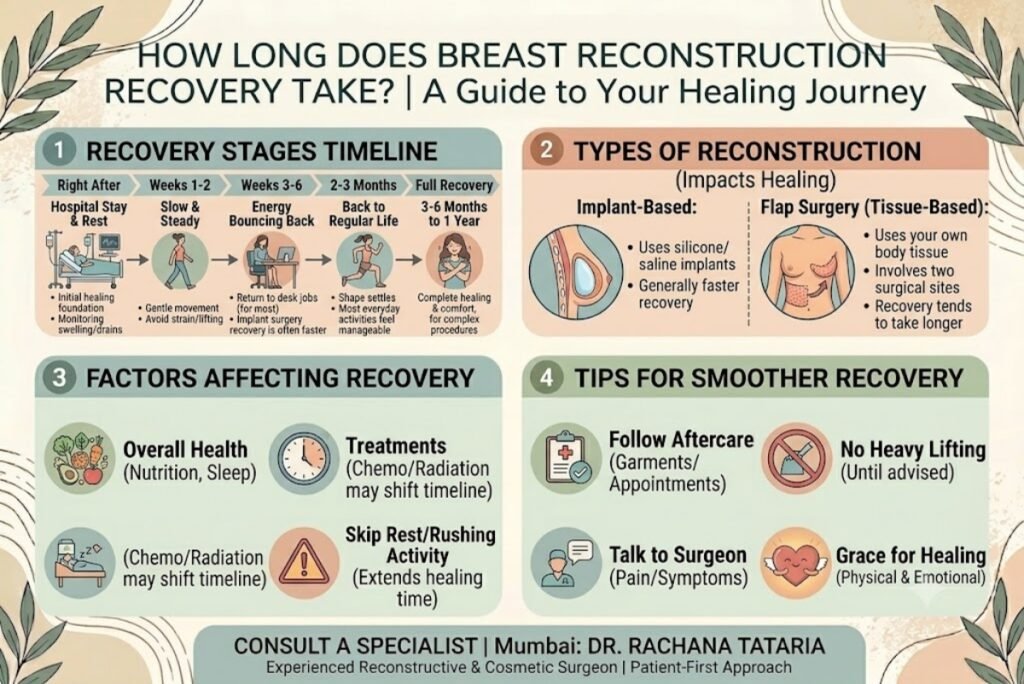
Right after surgery, you’ll likely spend a couple of days in the hospital. This is when your body starts the initial healing process, and your medical team keeps a close eye on things like swelling, drains (small tubes that help remove extra fluid), and pain levels.
During this phase, you won’t be doing much besides resting, and that’s exactly how it should be. Think of it as your body’s foundation-building stage.
Weeks One and Two: Slow and Steady
Once you’re home, the focus shifts to gentle movement and avoiding strain. Most people can manage light daily activities like walking around the house or doing simple chores within the first two weeks. Driving and lifting heavy objects, though, usually need to wait a little longer.
Some tiredness, tightness, or mild discomfort is completely expected here. It doesn’t mean something is wrong; it simply means your body is doing its job.
Weeks Three to Six: Getting Your Energy Back
This is usually when energy levels start bouncing back. Many women return to desk-based work around this time, though this really depends on the type of reconstruction done.
For implant-based reconstruction (using silicone or saline implants), recovery is often a bit quicker. For reconstruction using your own body tissue, often called flap surgery, recovery tends to take longer since it involves healing at two surgical sites instead of one.
Two to Three Months: Back to Regular Life
By this stage, most everyday activities, including light exercise, feel manageable again. Swelling continues to reduce, and the breast shape starts settling into its more permanent look.
Full recovery, meaning complete healing and comfort with normal movement, typically falls somewhere between three and six months. For more complex procedures, it can take up to a year for everything to feel completely settled.
What Affects Recovery Time?
A few things can speed up or slow down healing:
- Type of reconstruction – Implant-based procedures generally heal faster than tissue-based (flap) procedures.
- Additional treatments – If chemotherapy or radiation is part of your treatment plan, recovery timelines usually shift.
- Overall health – Factors like nutrition, sleep, and stress levels genuinely make a difference.
- Following aftercare instructions – Skipping rest or rushing back to activity can extend healing time.
Simple Tips for a Smoother Recovery
- Keep up with follow-up appointments, even if you’re feeling fine.
- Don’t rush back to gym sessions or heavy lifting.
- Wear any recommended support garments as advised.
- Talk openly with your surgeon about pain or unusual symptoms.
- Give yourself grace. Emotional healing matters just as much as physical healing.
When Should You Reach Out to Us?
Breast reconstruction recovery isn’t a race, and it doesn’t follow a strict calendar. Most people feel significantly better within six weeks, are largely settled by three months, and are fully recovered within six months to a year, depending on the procedure.
If you’re in Mumbai and exploring your options, consulting with a specialist who understands reconstructive surgery recovery time in detail, someone like Dr. Rachana Tataria, can help you get a realistic, personalised timeline based on your specific case rather than a generic estimate.
Recovery looks different for everyone, and that’s completely okay. What matters most is healing at a pace that’s right for you.