
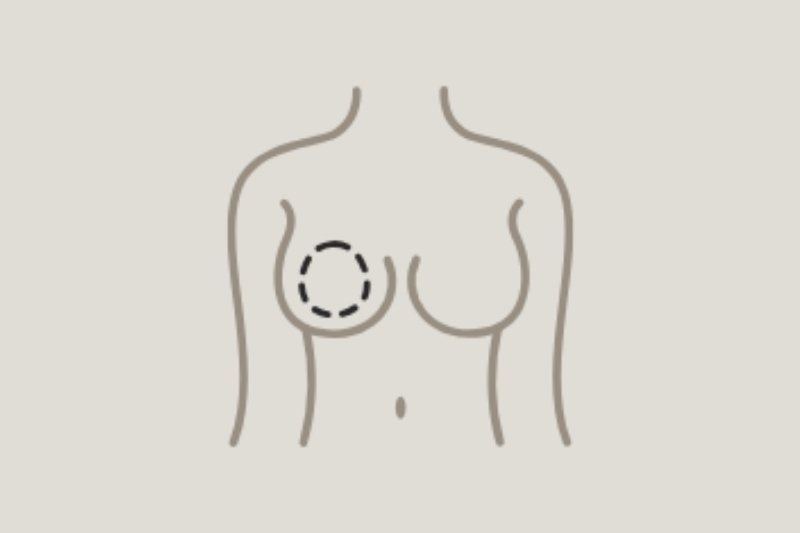

Revisional Breast Augmentation in Mumbai
When Your First Augmentation Did Not End the Story
Breast implants are not lifetime devices. Even with the best surgical technique and the best modern implants, a small percentage of patients will need revision surgery over the years for reasons that range from cosmetic disappointment to medical complications. The reasons women come for revisional breast augmentation are varied: an old augmentation that no longer looks natural; capsular contracture making the breast feel hard or look distorted; implant rupture; rippling; malposition; size dissatisfaction; or the wish to remove implants entirely. Each scenario has a different solution, and revisional breast surgery requires far more surgical judgement than first-time augmentation.
Dr. Rachana Tataria offers revisional breast augmentation in Mumbai at Fortis Hospital, Mulund. With FRCS Plastic Surgery (UK), MCh, dual breast fellowships, and operative experience across India and the UK NHS, she brings the technical depth needed to handle complex revision cases including capsular contracture (using en-bloc or partial capsulectomy as appropriate), site change between sub-muscular and prepectoral planes, ADM-supported revision, and complete implant removal (explantation).
Common Reasons for Revisional Breast Augmentation

Capsular Contracture
Scar tissue tightens around the implant, causing firmness, distortion, asymmetry, or pain. Graded I–IV (Baker grades).

Implant Rupture or Deflation
Silent rupture (silicone) or visible deflation (saline) detected on examination or imaging.

Implant Malposition
Bottoming out, lateral displacement, symmastia (medialisation toward the midline), or implant rotation (anatomical implants).

Rippling or Visibility
The implant edges visible through the skin, especially in thin patients with sub-glandular implants.

Implant Ageing
Older textured implants, older salines, or implants approaching 15–20 years that the patient wants replaced or removed.

BIA-ALCL Concerns
It is a rare condition linked to certain textured implants. Any concerning fluid collection around an implant warrants evaluation.

Breast Implant Illness (BII)
A constellation of systemic symptoms some patients attribute to implants. While not formally classified as a medical diagnosis, many such patients seek complete explantation with capsulectomy.

Patient Preference for Explantation
Choosing to live without implants, with or without fat grafting or breast lift.
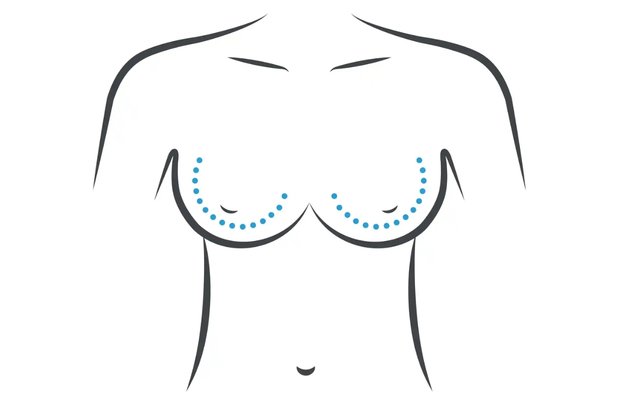
Revisional Surgical Options
Capsulectomy (Partial or Total / En-Bloc)
En-bloc capsulectomy removes the implant and the entire capsule as a single intact unit and is commonly requested in BII or BIA-ALCL concerns.
ADM-Supported Revision
Using acellular dermal matrix to reinforce thin tissue, reshape the implant pocket, or support the new implant position.
Mastopexy with Revision
Combining a breast lift if the breast has drooped since the original augmentation.
Complete Explantation (with or without Fat Grafting)
Removing implants entirely, sometimes combined with fat grafting and/or a breast lift to restore natural shape.
Implant Exchange
Replacement of the old implant with a new, often modern smooth-surface, cohesive gel implant.
Site Change
Moving from sub-glandular to sub-muscular plane, or from sub-muscular to prepectoral with ADM support.
Who Needs Revisional Breast Augmentation?
Women with one or more of the complications listed above.
Women unhappy with their original aesthetic result for any reason.
Women whose implants are 10+ years old who want assessment, even without symptoms.
Patients with concerns about their existing implant brand or type (e.g. specific textured implants linked to BIA-ALCL).
Non-smokers, or willing to stop smoking before surgery (especially important in revision).
The Procedure
Revisional breast augmentation is performed under general anaesthesia and usually takes 2 to 5 hours.
The procedure begins with removal of the old implant as part of the planned surgical sequence.
Capsulectomy, pocket revision, or implant site change is performed based on the surgical requirement.
ADM support, lift procedures, and placement of the new implant are completed when required.
Drains may be used temporarily, with most patients staying in the hospital for 1–2 nights.
Why Choose Dr. Rachana Tataria for Revisional Breast Surgery in Mumbai
01
FRCS Plastic Surgery (UK) and oncoplastic breast surgery fellowship important because revision surgery requires reconstructive-level tissue management, not just cosmetic technique.
02
Familiarity with all modern techniques including en-bloc capsulectomy, prepectoral conversion with ADM, and explantation with fat grafting.
03
Use of FDA-approved implants from established global manufacturers.
04
Honest counselling, Dr. Tataria does not push revision when conservative management is appropriate, and equally does not delay revision when it is clearly indicated.
05
Female plastic surgeon particularly valued by patients dealing with disappointing or complicated outcomes from previous surgery.
06
Multilingual consultation in English, Hindi, Marathi, Gujarati, Kutchi, Kannada, and French.
The Recovery Journey
Return to Work and Daily Activities
Most patients can return to desk work and routine activities within 7–14 days after surgery.
Gradual Return to Physical Activity
Light activities begin within 3–4 weeks, while full physical activity resumes after 6–8 weeks.
Supportive Garments During Healing
Surgical support bras are generally worn for 4–6 weeks to support healing and implant positioning.
Structured Follow-Up and Monitoring
Follow-up appointments are scheduled regularly to monitor healing and long-term surgical results.
FAQs : Revisional Breast Augmentation in Mumbai
Modern implants do not have a fixed expiry. Most patients can expect 15–20 years or longer. Routine assessment every few years is recommended. Replacement is required if there is rupture, contracture, malposition, or significant aesthetic change.
En-bloc capsulectomy is the removal of the implant and its surrounding capsule as a single intact unit, without breaching the capsule. It is commonly requested in suspected BIA-ALCL or by patients concerned about Breast Implant Illness.
Yes. Many patients choose to remove implants entirely, with or without a breast lift, with or without fat grafting. Dr. Tataria will discuss what your natural breast is likely to look like after explantation, based on your tissue.
Not necessarily. Many patients use revision surgery as an opportunity to downsize, upsize, or change implant shape/type based on their current preferences and body.
Pain is generally similar. Capsulectomy can extend operative time and may produce slightly more bruising, but pain management is typically very effective.
Coverage depends on the reason. Implant rupture, capsular contracture causing pain, BIA-ALCL, and reconstructive revisions may be covered. Purely cosmetic revisions are generally not covered.
With modern smooth implants and appropriate techniques, revisions typically last 10–15 years or longer. Lifestyle factors, pregnancy, and weight changes all affect longevity.
Get in Touch with Dr. Rachana Tataria
Whether you’re ready to take the next step or have questions about Revisional Breast Augmentation, we are here to guide you.
Begin your journey toward transformation.