
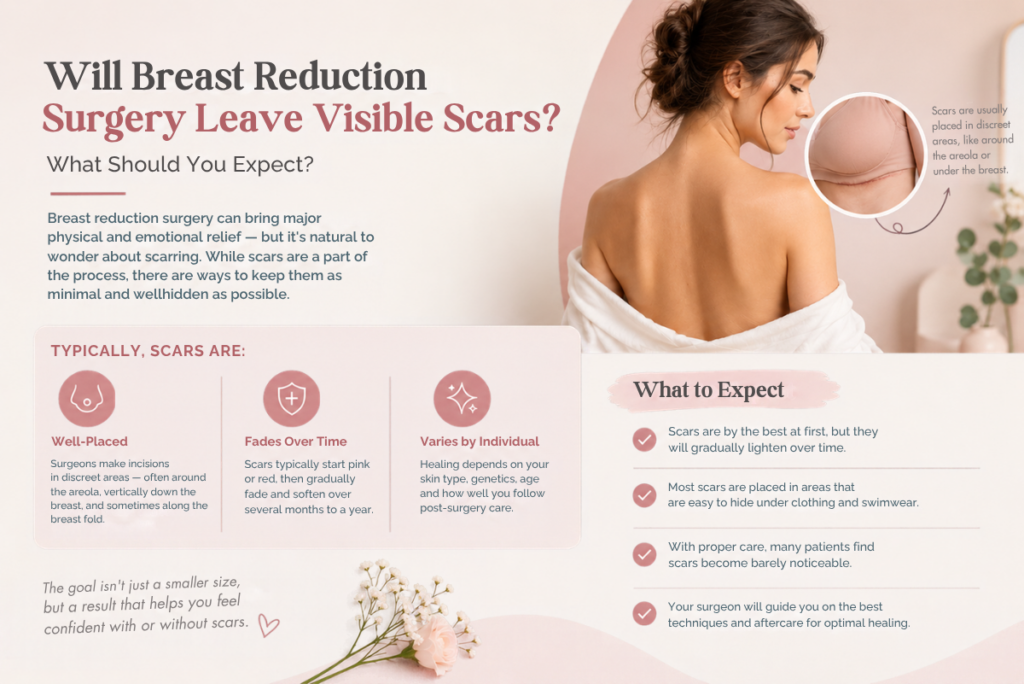
Will Breast Reduction Surgery Leave Visible Scars? What Should You Expect?
If you’re thinking about breast reduction surgery, the scar question is probably near the top of your list. It’s a fair worry. Nobody wants to trade back pain for a mark they feel self-conscious about.
Here’s the honest answer: yes, breast reduction surgery leaves scars. But in most cases, they fade well, sit in places clothing covers, and many women say the relief is worth it. Let’s walk through what to expect.
Why Scars Are Part of the Process
Any breast surgery that involves cutting the skin leaves a mark. In breast reduction, the surgeon removes extra tissue, fat, and skin, then lifts and reshapes what remains. Those steps need incisions (small, planned cuts), and the body heals them by forming scar tissue.
A skilled breast reduction surgeon plans these cuts carefully so the scars are as short and as hidden as possible. Surgeons like Dr Rachana Tataria focus on placing incisions where they’re least noticeable.
Where Will the Scars Be?
The scar pattern depends on your breast size and how much needs to be removed. The three common patterns are:
- Around the areola (the dark skin around the nipple): This scar blends into the edge of the areola, so it’s often the least noticeable.
- A line running down from the areola to the crease under the breast: It looks like a vertical line. It’s common for moderate reductions.
- A curve along the breast crease: This is the “anchor” pattern, used for larger reductions. The scar sits in the natural fold under the breast, where it’s usually hidden.
Not everyone needs all three. Your surgeon will suggest the pattern based on your body and goals.
How Scars Change Over Time
Scars don’t look the same on day one as they do a year later. Here’s the usual journey:
- First few weeks: The scars look red or pink and may feel slightly raised or tight. This is normal healing.
- Three to six months: They often stay noticeable but start to soften.
- Six months to a year or more: Most scars fade to a paler, flatter line that’s much less visible.
Healing takes patience. Many women feel worried around month two or three, but that’s often just the middle of the process.
What Affects How Your Scars Heal?
Not everyone scars the same way. A few things play a role:
- Skin type and tone: People with darker skin, which includes many of us in Mumbai, can be more prone to darker or thicker scars. This doesn’t mean you shouldn’t have surgery, but it’s worth discussing openly with your surgeon.
- Genetics: If your family tends to form thick scars, you may too.
- Aftercare: Following your surgeon’s instructions on wound care and activity really matters.
- Sun exposure: Sun can darken fresh scars. Keep them covered or protected while they heal.
- Smoking: It slows healing and can make scars look worse.
Simple Ways to Help Your Scars Heal Well
You can’t control everything, but you can help. Here are some practical steps:
- Follow your post-surgery instructions. Wear the recommended support bra and avoid heavy lifting for the time your surgeon advises.
- Keep the area clean and dry. Don’t pick at scabs or peel anything off.
- Use scar care only when approved. Silicone sheets or gels are often suggested, but wait until your surgeon says the wound has healed.
- Protect from the sun. Even in Mumbai’s cloudy months, UV rays can reach the skin.
- Eat well and stay hydrated. Your body needs good fuel to repair itself.
- Attend every follow-up. Small concerns are easier to manage when caught early.
A Realistic Way to Look at It
Here’s my take as someone who has watched this space for years: the women who feel happiest after surgery usually walk in with realistic expectations. Scars will be there, but so will lighter shoulders, easier movement, and clothes that fit better. Weigh both sides, and ask your surgeon plenty of questions before you decide.
Final Thoughts
So, will breast reduction surgery leave visible scars? Yes, but they’re usually well placed and fade with time. Understanding the process, choosing an experienced breast reduction surgeon, and following aftercare carefully give you the best chance of a good result. If you’re considering this in Mumbai, book a consultation with Dr Rachana Tataria to talk through your options.