
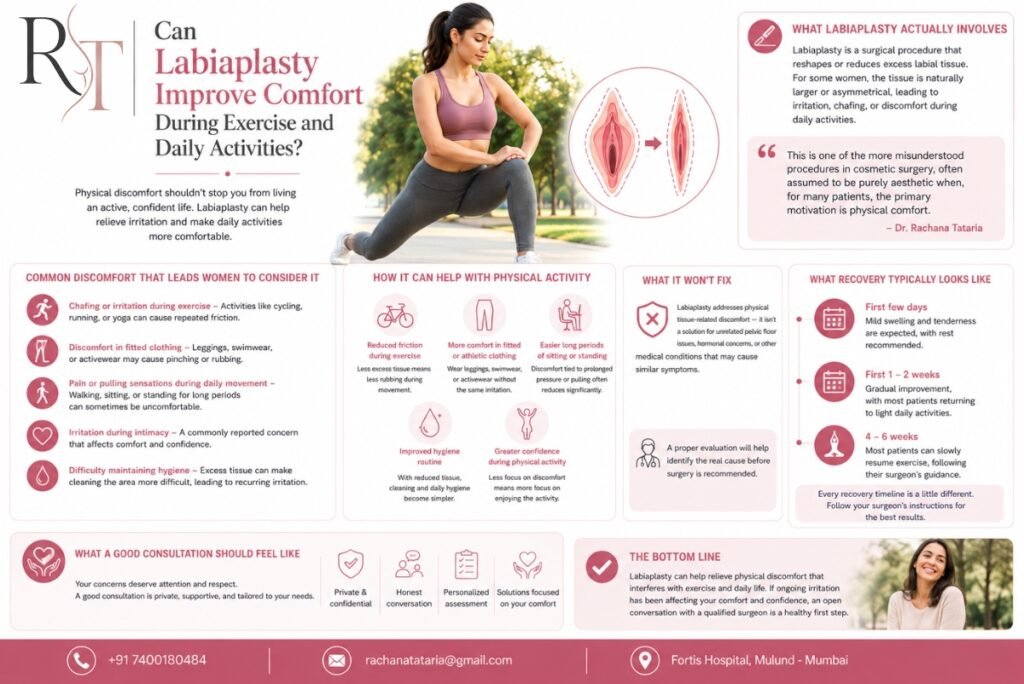
Can Labiaplasty Improve Comfort During Exercise and Daily Activities?
For many women, this isn’t a topic that comes up in casual conversation, but it’s a lot more common than people realize. Ongoing physical discomfort during exercise, certain clothing, or even everyday movement can quietly affect quality of life for years before anyone decides to ask about solutions. One procedure that often comes up in this conversation is Labiaplasty.
What Labiaplasty Actually Involves
In simple terms, labiaplasty is a surgical procedure that reshapes or reduces excess labial tissue. For some women, this tissue is naturally larger or asymmetrical, which can lead to physical irritation, chafing, or discomfort during daily activities.
Dr. Rachana Tataria notes that this is one of the more misunderstood procedures in cosmetic surgery, often assumed to be purely aesthetic when, for many patients, the primary motivation is physical comfort.
Common Discomfort That Leads Women to Consider It
If you’re wondering whether this might apply to you, here are some frequently reported issues:
- Chafing or irritation during exercise: Activities like cycling, running, or yoga can cause repeated friction that becomes genuinely painful over time.
- Discomfort in fitted clothing: Leggings, swimwear, or activewear may cause pinching or rubbing that’s hard to avoid.
- Pain or pulling sensations during daily movement: Simply walking, sitting, or standing for long periods can sometimes be uncomfortable.
- Irritation during intimacy: This is another commonly reported concern that affects comfort and confidence.
- Difficulty maintaining hygiene: Excess tissue can occasionally make cleaning the area more difficult, leading to recurring irritation.
How the Procedure Can Help With Physical Activity
Since the goal is often functional, not just cosmetic, here’s what tends to improve after recovery:
- Reduced friction during exercise: Less excess tissue generally means less rubbing during movement-heavy activities.
- More comfort in fitted or athletic clothing: Many patients report being able to wear leggings or swimwear without the same irritation as before.
- Easier long periods of sitting or standing: Discomfort tied to prolonged pressure or pulling often reduces significantly.
- Improved hygiene routine: With reduced tissue, cleaning and daily hygiene often become simpler and less irritating.
- Greater confidence during physical activity: Less focus on discomfort often means more focus on actually enjoying the activity itself.
What It Won't Fix
It’s worth being upfront here too. Labiaplasty addresses physical tissue-related discomfort; it isn’t a solution for unrelated pelvic floor issues, hormonal concerns, or other medical conditions that may cause similar symptoms.
If your discomfort stems from a different underlying cause, a proper evaluation will help identify that before jumping to surgery as the answer.
What Recovery Typically Looks Like
Recovery timelines vary, but here’s a general idea of what most patients experience:
- First few days — Mild swelling and tenderness are expected, with rest recommended.
- First 1-2 weeks — Gradual improvement, with most patients returning to light daily activities.
- 4-6 weeks — Most patients can slowly resume exercise, following their surgeon’s specific guidance.
Every recovery timeline is a little different, so following your surgeon’s personalized instructions matters more than comparing your healing to someone else’s.
What a Good Consultation Should Feel Like
This is a topic many women quietly deal with for years simply because it feels too personal to bring up. But physical comfort during everyday life and exercise is a completely valid medical concern, and exploring appropriate body contouring options is not something to downplay.
If ongoing discomfort has been affecting your daily activities, having an honest, private conversation with a qualified surgeon about your concerns and potential body contouring procedures is a reasonable and healthy first step, not an overreaction.