
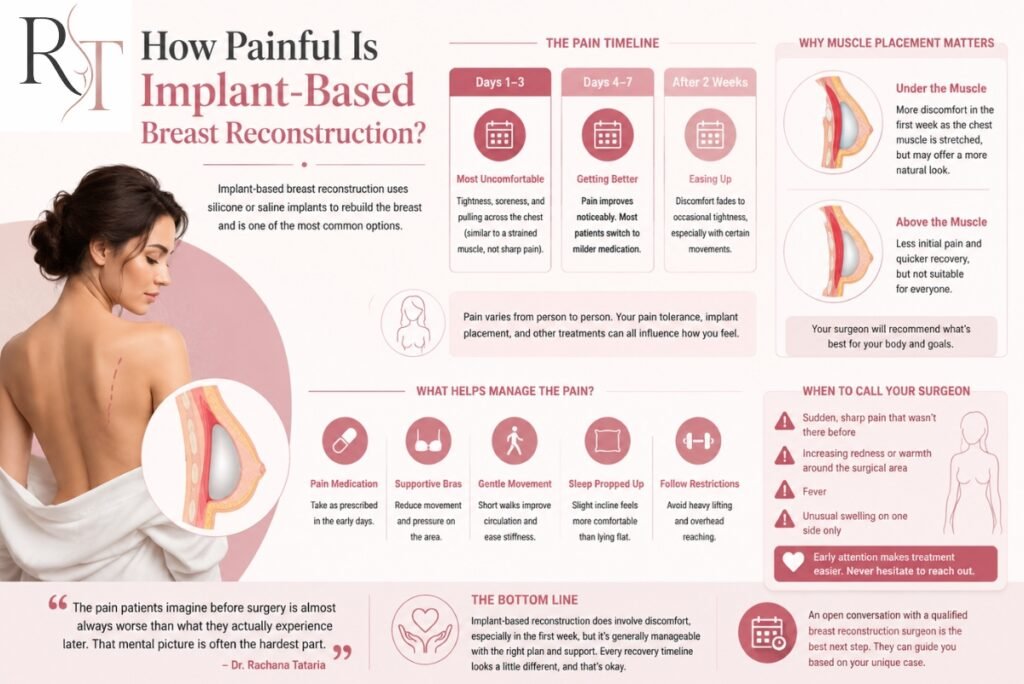
How Painful Is Implant-Based Breast Reconstruction?
If you or someone you love is preparing for breast reconstruction after a mastectomy, one question probably keeps coming up: “How much is this going to hurt?”
It’s a fair question. And honestly, it deserves a straight answer instead of vague reassurances.
First, What Exactly Is Implant-Based Surgery?
In simple terms, Implant-Based Surgery rebuilds the shape of the breast using a silicone or saline implant, instead of using tissue from another part of your body. It’s one of the most common reconstruction options because it usually involves a shorter surgery and recovery time compared to tissue-based methods.
According to Dr. Rachana Tataria, a breast reconstruction specialist who has guided hundreds of women through this journey, “The pain patients imagine before surgery is almost always worse than what they actually experience afterward. That mental picture is often the hardest part.”
That’s an important point to sit with for a second.
So, How Painful Is It?
Here’s the honest breakdown:
- The first 2-3 days are usually the most uncomfortable. Think tightness, soreness, and a pulling sensation across the chest, similar to a strained muscle, not a sharp or stabbing pain.
- Days 4-7 tend to feel noticeably better. Most patients switch from strong pain relief to milder medication around this time.
- After week two, discomfort usually fades into occasional tightness, especially with certain movements like reaching overhead.
Pain levels vary from person to person, and that’s completely normal. Your pain tolerance, the type of implant placement (above or below the chest muscle), and whether you’re combining it with other treatments can all influence how you feel.
Why the Chest Muscle Placement Matters
This is a detail worth understanding, because it directly affects comfort:
An implant placed under the muscle tends to cause more discomfort in the first week, since the chest muscle is stretched. However, it may offer a more natural-looking result for some body types.
An implant placed above the muscle generally involves less initial pain and a quicker recovery, though it isn’t the right fit for every patient.
Your surgeon will recommend the placement that suits your body, your goals, and your medical history, not a one-size-fits-all approach.
What Actually Helps Manage the Pain?
You don’t have to just “push through it.” A few things genuinely make a difference:
- Pain medication as prescribed – Take it on schedule in the early days rather than waiting until pain builds up.
- Supportive surgical bras – These reduce movement and pressure on the healing area.
- Gentle movement – Short, slow walks help circulation and can actually ease stiffness.
- Sleeping propped up – Lying flat too early can increase tightness; a slight incline often feels more comfortable.
- Following activity restrictions – avoiding heavy lifting or overhead reaching protects healing tissue and reduces pain flare-ups.
Signs You Should Visit Your Surgeon
Mild soreness, tightness, and occasional throbbing are expected during recovery. However, Dr. Rachana Tataria recommends contacting your surgical team if you notice:
- Sudden, sharp pain that wasn’t there before
- Increasing redness or warmth around the surgical area
- Fever
- Unusual swelling on one side only
Catching these signs early usually makes treatment simpler, so there’s no need to feel like you’re “overreacting” by asking questions.
The Emotional Side of Recovery
Physical pain is only part of the story. Many women going through Implant-Based Breast Reconstruction describe the emotional adjustment as equally significant. Feeling supported by family, friends, or a caring medical team often makes the physical recovery feel more manageable too.
The Bottom Line
Implant-based reconstruction does involve discomfort, especially in the first week, but it’s generally manageable with the right pain plan and realistic expectations. Every recovery timeline looks a little different, and that’s okay.
If you’re considering this procedure, an open conversation with a qualified breast reconstruction surgeon is the best next step. They can walk you through what to expect based on your specific case.