
Latissimus Dorsi Flap Reconstruction in Mumbai
Latissimus Dorsi Flap Reconstruction
A Trusted Workhorse of Breast Reconstruction
Among the many reconstructive options after mastectomy, the latissimus dorsi (LD) flap holds a special place. It is one of the oldest, most reliable, and most versatile techniques in plastic surgery used not only for breast reconstruction but also for chest wall reconstruction, head and neck surgery, and complex limb salvage. For breast reconstruction specifically, the LD flap offers something rare: a robust, well-vascularised tissue option that performs reliably even in difficult circumstances, including after radiotherapy or when implant reconstruction has failed.
Dr. Rachana Tataria performs LD flap breast reconstruction in Mumbai at Fortis Hospital, Mulund. With an FRCS in Plastic Surgery from the Royal College of Surgeons, England, an MCh in Plastic Surgery, and fellowships in oncoplastic breast surgery and breast microvascular reconstruction, she brings 12+ years of operative experience to one of the most adaptable procedures in reconstructive surgery.
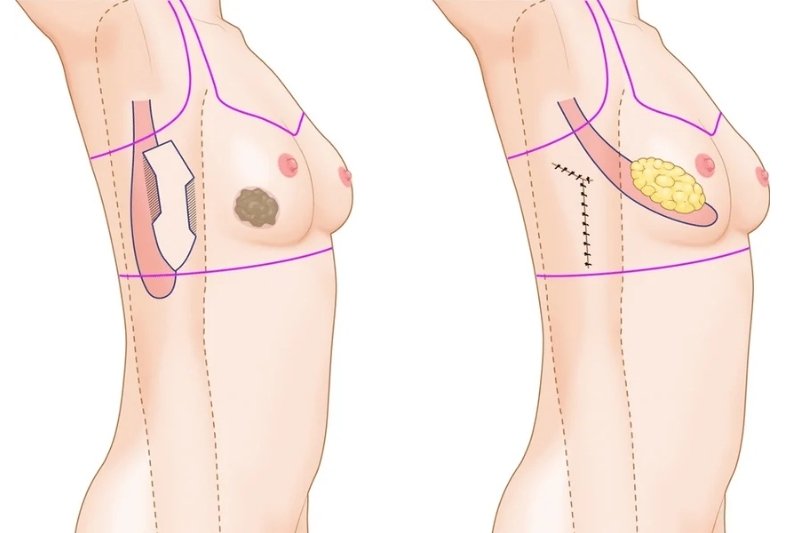
What Is the Latissimus Dorsi Flap?
The latissimus dorsi is a large, flat muscle of the back that extends from the shoulder blade to the lower back. In LD flap reconstruction, this muscle along with an overlying ellipse of skin and fat is rotated from the back to the chest while keeping its original blood supply attached. Because the flap remains connected to its own thoracodorsal artery and vein, it is called a ‘pedicled flap’ rather than a ‘free flap’ there is no need for microsurgical reconnection of blood vessels. This makes the procedure more reliable in less-than-ideal conditions, such as previously irradiated chest skin.
LD Flap With or Without an Implant

LD flap alone (autologous LD)
Uses only the muscle, skin, and fat from the back. Suitable for reconstruction of small to medium breasts.

LD flap with implant
Combines the back tissue with a silicone implant placed underneath. This is the more common technique, especially when larger breast volume is needed.
Your surgeon will recommend the right approach based on the size of the opposite breast, the amount of back tissue available, your overall body type, and your oncology history.
Why Choose LD Flap Reconstruction?
Highly reliable blood supply
Because the flap stays attached to its own vessels, flap loss is extremely rare.
Single operation in most cases
It is shorter and less complex than microsurgical flaps like DIEP or TUG.
Suitable for patients not eligible for microsurgery
For example, those with vascular disease, very long operative times, or who prefer a shorter procedure.
Salvage option
Frequently used to rescue failed implant-only reconstructions or correct deformities from previous reconstructive attempts.
Stable, lasting result
Combines durable muscle coverage with either natural fat volume or implant volume.
Excellent option after radiotherapy
Radiated chest skin and tissue heal poorly. The LD flap brings well-vascularised tissue from the unirradiated back, improving outcomes.
Who Is a Suitable Candidate for LD Flap?
Women who have undergone or are planning a mastectomy and prefer their own tissue but are not candidates for DIEP or TUG flap.
Patients who have completed or will need chest wall radiotherapy.
Women with failed implant-only reconstruction needing a more reliable tissue cover.
Patients seeking a reconstruction with shorter operative time than microsurgery.
Women in good general health, non-smoking or willing to stop smoking before surgery.
Patients accepting of an additional scar on the back.
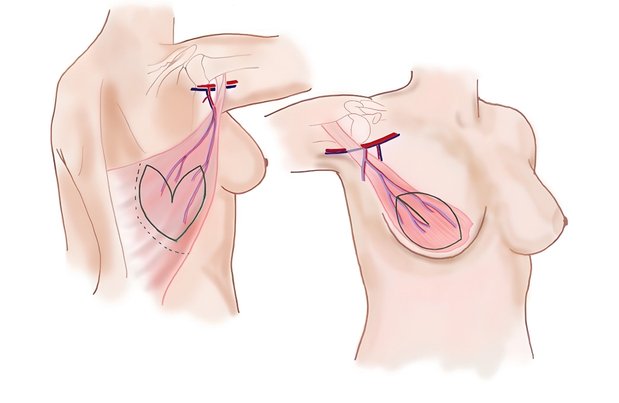
The LD Flap Procedure
LD flap reconstruction is performed under general anaesthesia and takes 3 to 5 hours, significantly shorter than microsurgical flaps. The procedure involves:
Careful preoperative marking of the muscle, the skin ellipse on the back, and the chest reconstruction site.
The latissimus dorsi muscle along with a horizontal or oblique ellipse of overlying skin is raised, while preserving its main blood supply (thoracodorsal vessels).
The flap is rotated through a tunnel under the skin of the armpit and brought to the chest. Its blood vessels remain intact throughout.
The muscle is sutured into position over the chest wall, often covering and supporting an implant placed beneath it. The skin ellipse forms part of the new breast surface.
The back is closed in layers with drains. A horizontal or diagonal scar is left on the back.
Why Choose Dr. Rachana Tataria for LD Flap in Mumbai
01
Surgery at Fortis Hospital, Mulund full hospital facilities, ICU support, and dedicated breast reconstruction recovery protocols.
02
FRCS Plastic Surgery from the Royal College of Surgeons, England international qualification standards.
03
Female plastic surgeon additional comfort during breast surgery.
04
12+ years of operative experience including consultant practice in Mumbai and at Wythenshawe Hospital, Manchester.
05
Multilingual consultations in English, Hindi, Marathi, Gujarati, Kutchi, Kannada, and French.
06
Fellowship-trained in oncoplastic breast surgery at University Hospital Coventry & Warwickshire NHS.
The Recovery Journey
Hospital Stay and Initial Recovery
Most patients remain in the hospital for 3–5 days during the early recovery and healing phase.
Drain Care and Shoulder Protection
Drains usually remain in place for 10–14 days, while shoulder movement is temporarily restricted.
Return to Work and Daily Activities
Most patients return to desk work within 3 weeks and resume full activity by 6–8 weeks.
Long-Term Function and Physical Strength
Most individuals do not notice weakness in daily life, though athletes may experience subtle changes.
FAQs : Latissimus Dorsi Flap Reconstruction in Mumbai
Will I lose strength in my back or arm after LD flap surgery?
Most patients do not experience meaningful functional loss in daily life. The body compensates well by recruiting nearby muscles. Patients who do high-performance athletics (competitive swimming, climbing, certain weightlifting movements) may notice subtle changes.
Will the back scar be visible?
The scar runs horizontally or diagonally across the upper back and is usually hidden by bra straps, swimsuits, and most clothing. It fades over 12–18 months with proper scar care.
Is LD flap better than DIEP flap?
Neither is universally better. DIEP gives a fully natural-tissue reconstruction with no implant required and no back scar, but is a longer microsurgery. LD is a more reliable shorter operation, especially after radiotherapy or in salvage cases, but often requires an implant for full volume.
Can LD flap be done years after my mastectomy?
Yes. Delayed LD flap reconstruction is commonly performed months or years after the original mastectomy, including after completion of chemotherapy and radiotherapy.
Will I need physiotherapy after LD flap surgery?
Yes. A structured physiotherapy programme begins from week 2–3 to restore the full shoulder range of motion. Most patients regain near-full function within 6–8 weeks.
Is LD flap covered by insurance?
Yes, most health insurance policies in India cover breast reconstruction after mastectomy as part of breast cancer treatment. Insurance verification is done before surgery.
How long does LD flap surgery take?
LD flap reconstruction usually takes 3 to 5 hours significantly shorter than microvascular flaps such as DIEP (6–10 hours) or TUG (6–9 hours).
Get in Touch with Dr. Rachana Tataria
Whether you’re ready to take the next step or have questions about Latissimus Dorsi Flap Reconstruction, we are here to guide you.
Begin your journey toward transformation.