
Gynecomastia Surgery (Male Chest Correction) in Mumbai
Gynecomastia Surgery
More Common Than Most Men Realise. And Easier to Treat Than Most Men Expect.
Gynecomastia is the medical term for enlarged male chest tissue affects up to 65% of men at some point in their lives. For most, it appears during puberty and resolves on its own. For many, it persists into adulthood, growing more pronounced with weight gain, hormonal changes, certain medications, or steroid use. The men who come for surgery are usually those who have lived with this condition for years — sometimes decades — avoiding swimming, declining beach holidays, layering shirts in summer, hesitating before intimacy, and quietly carrying a daily self-consciousness that few people around them ever see.
Gynecomastia surgery is the only definitive treatment when the condition does not resolve naturally and when weight loss has not corrected it. Dr. Rachana Tataria offers discreet, expert gynecomastia correction in Mumbai at Fortis Hospital, Mulund. With FRCS Plastic Surgery (UK), MCh, and 12+ years of operative experience across India and the UK NHS, she brings precise surgical technique and strict patient confidentiality to a procedure that, for the patient, is often deeply personal.
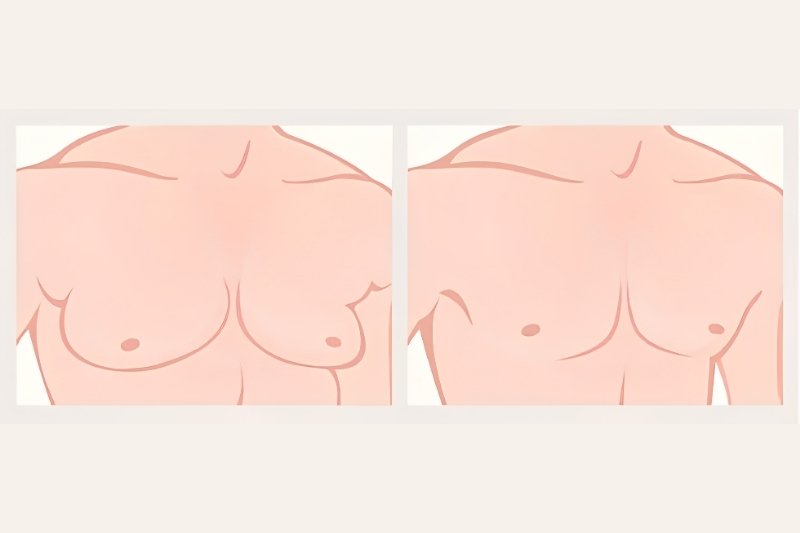
What Gynecomastia Actually Is
Gynecomastia is the enlargement of male chest tissue, made up of two components in varying proportions:
- Glandular Tissue : A firm, sometimes tender disc of true breast tissue located beneath the nipple. This component does not respond to weight loss or exercise.
- Fatty Tissue : Surrounding fatty enlargement of the chest. Responds partly to weight loss but often leaves residual fullness.
When the enlargement is purely fatty (no firm gland), it is called pseudogynecomastia. This responds to weight loss in many cases. True gynecomastia includes glandular tissue and does not resolve with diet or exercise only surgery removes it.
Common Causes
Puberty
Most teenage gynecomastia resolves within 2 years. Cases persisting beyond age 18 usually require surgery.
Certain Medications
Including some antidepressants, anti-androgens, antibiotics, ulcer medications, and chemotherapy drugs
Recreational Substance Use
Including marijuana and alcohol.
Hormonal Imbalance
An imbalance between testosterone and oestrogen, particularly during ageing.
Underlying Medical Conditions
Including thyroid disease, liver disease, kidney disease, and rare tumours (evaluated when clinically indicated).
Weight Gain
Increases both fatty and glandular tissue.
Grades of Gynecomastia

Grade 1
Small enlargement around the nipple, no excess skin.

Grade 2a
Moderate enlargement across the chest, no excess skin.

Grade 2b
Moderate enlargement with slight excess skin.

Grade 3
Significant enlargement with marked excess skin, often after major weight loss.

Grade 4
Severe enlargement with significant breast-like droop and skin excess.
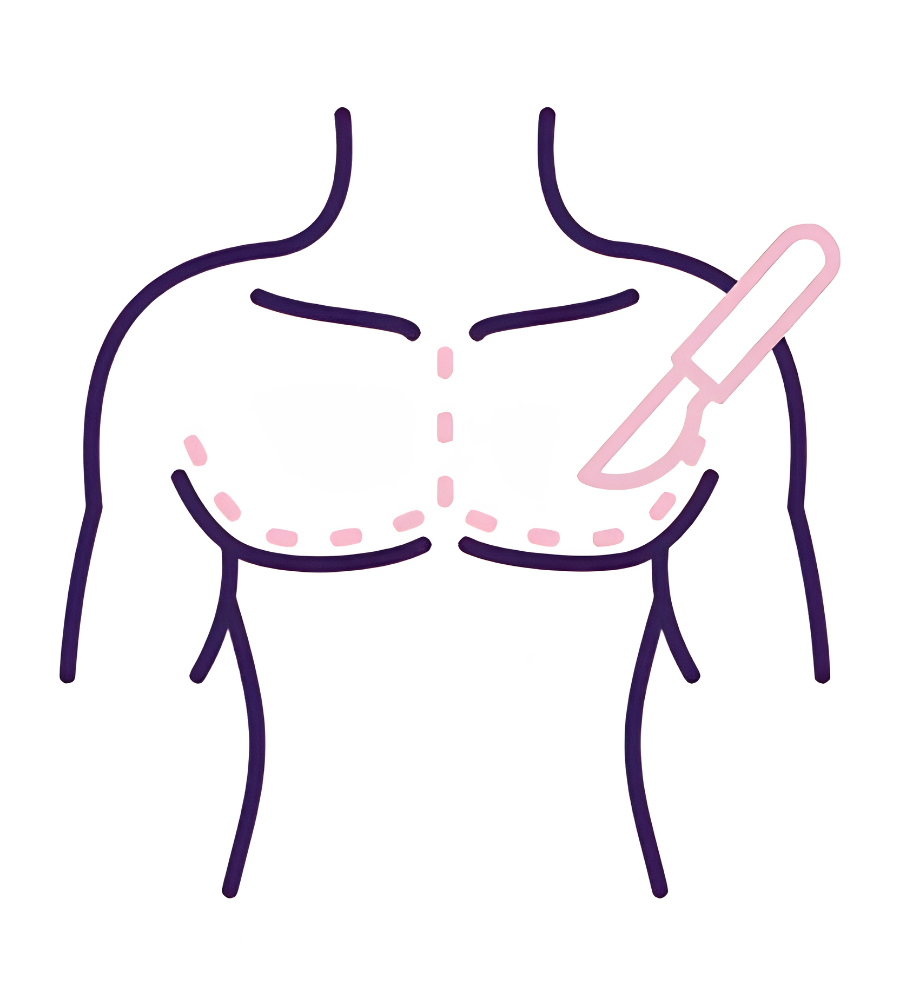
Grade determines the surgical technique. Grades 1–2a typically respond well to liposuction with gland excision through a tiny incision. Grades 2b–4 often need additional skin excision.
Surgical Techniques
Why Combined Liposuction + Gland Excision Matters
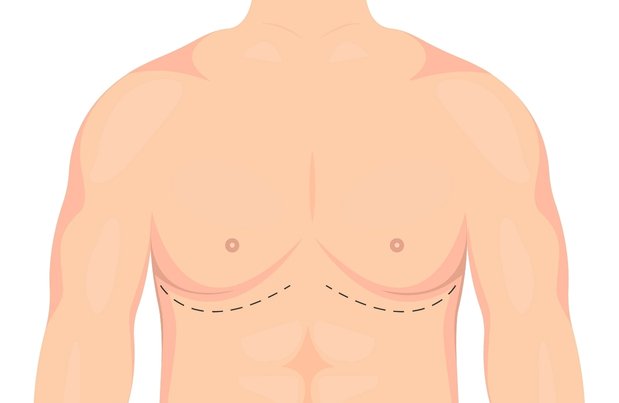
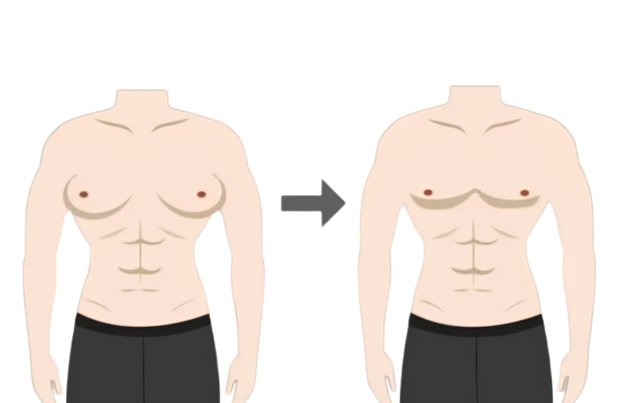
Liposuction alone cannot treat true gynecomastia, because the firm glandular disc beneath the nipple does not respond to suction. Surgeons who treat gynecomastia with liposuction only — without addressing the gland — often produce a ‘saucer deformity’ (a depressed area around a persistent firm gland) and recurrence. Dr. Rachana Tataria’s approach combines both: liposuction reshapes the entire chest contour, and the gland is precisely excised, leaving a flat, masculine chest without recurrence.
Who Is a Good Candidate?
Men aged 18 and above (preferably 21+ to allow puberty-related gynecomastia to resolve naturally).
Men with gynecomastia present for at least 12 months without spontaneous resolution.
Stable body weight for at least 6 months.
Non-smokers, or willing to stop smoking before surgery.
Men in good general health.
Men who have addressed any underlying cause (stopped anabolic steroids, reviewed medications, evaluated hormones if clinically indicated).
The Procedure
Gynecomastia surgery is performed under general anaesthesia and usually takes 1.5 to 2.5 hours.
Surgical markings are completed with the patient standing before the procedure begins.
Small punctures are created for liposuction, and fat is removed using fine cannulas.
Glandular tissue is removed through a small incision hidden along the natural areola border.
Closure is completed with absorbable sutures, followed by immediate compression vest application.
Why Choose Dr. Rachana Tataria for Gynecomastia Surgery in Mumbai
01
FRCS Plastic Surgery (UK), MCh, and 12+ years of operative experience across India and the UK NHS – international qualification standards applied to male contouring.
02
Strict patient confidentiality – gynecomastia is one of the most discreet procedures in our practice. From initial enquiry to follow-up, your privacy is protected.
03
Surgery at Fortis Hospital, Mulund, JCI-accredited tertiary hospital with full safety standards.

04
Combined liposuction + gland excision technique, the gold standard, avoiding the recurrence and saucer deformity associated with liposuction-only treatment.
05
Use of advanced liposuction technologies (tumescent, power-assisted, ultrasound-assisted) selected based on tissue fibrosity.
06
Multilingual consultation in English, Hindi, Marathi, Gujarati, Kutchi, Kannada, and French.
The Recovery Journey
Bruising and Swelling During Healing
Bruising and swelling are most noticeable during the first few days and improve over several weeks.
Return to Work and Daily Activities
Most patients can return to desk work and routine activities within 5–7 days after surgery.
Gradual Return to Exercise and Gym Work
Cardio and gym activities resume gradually, with upper body workouts delayed for complete healing.
Compression Support and Final Chest Shape
Compression vests are worn for several weeks as the final chest contour develops gradually over time.
FAQs : Gynecomastia Surgery in Mumbai
How do I know if I have true gynecomastia or just chest fat?
True gynecomastia includes a firm disc of glandular tissue beneath the nipple, which you can often feel. Pure chest fat (pseudogynecomastia) is soft and responds to weight loss. Clinical examination confirms the diagnosis; ultrasound is occasionally used in unclear cases.
Will the gynecomastia come back after surgery?
Permanent removal of the glandular tissue is achieved with complete excision. Recurrence is rare and is usually associated with ongoing anabolic steroid use, significant weight gain, or untreated hormonal causes.
Are the scars visible?
Incisions are placed in the natural pigmented edge of the areola, where scars are typically very small and fade well over 6–12 months. Most patients find them almost invisible after healing.
Can liposuction alone fix gynecomastia?
Only if the condition is purely fatty (pseudogynecomastia). True gynecomastia with glandular tissue requires combined liposuction and gland excision to avoid recurrence and saucer deformity.
When can I go back to the gym?
Light cardio at 2–3 weeks, lower body workouts at 4 weeks, full chest and upper body workouts at 6–8 weeks. Returning to chest workouts too early risks bleeding and shape distortion.
Is gynecomastia surgery covered by insurance?
Most policies in India treat gynecomastia as a cosmetic concern and do not cover it. Exceptions exist when significant medical symptoms (pain, nipple discharge, very large grade, documented psychological distress) are present. Pre-authorisation support is provided by the clinic team.
How discreet is the consultation process?
Consultations are private, conducted in a clinical setting, with the surgeon and a chaperone. All records are confidential. Most patients are surprised by how routine and respectful the process is — gynecomastia is one of the most commonly performed plastic surgical procedures globally.
Get in Touch with Dr. Rachana Tataria
Whether you’re ready to take the next step or have questions about Gynecomastia Surgery, we are here to guide you.
Begin your journey toward transformation.